Objects of Desire
The calculator that found the square root: Sofia’s machines, from turbines to illusions
A 1928 Ford, Bulgaria’s first microcomputer and the 1900 power station that ran the trams.
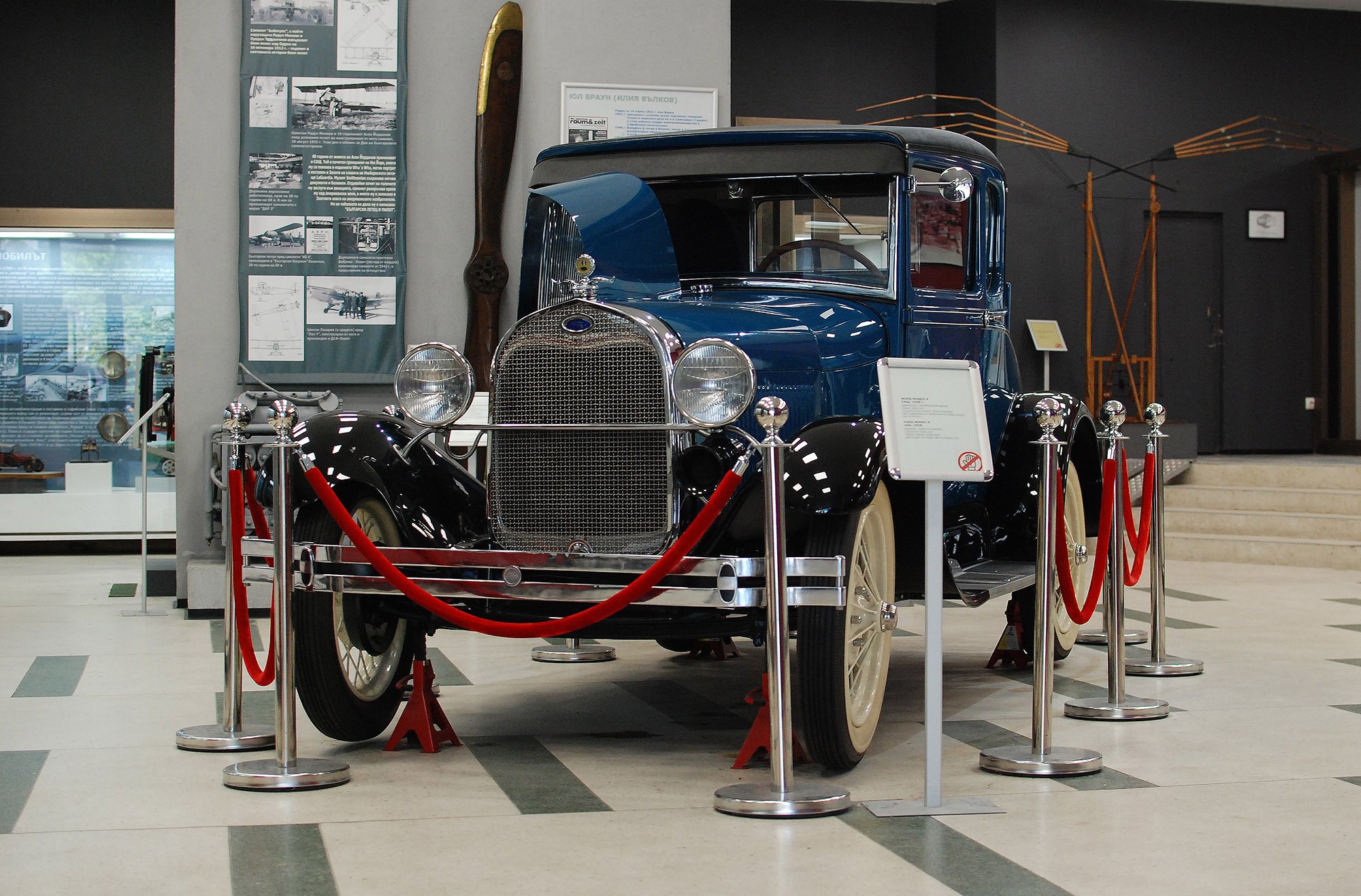
Photo Credit
Image courtesy of © National Polytechnic MuseumBulgaria once built an electronic calculator that could take a square root, the first of its kind to do so, according to the museum that keeps it. The National Polytechnic Museum also has a 1928 Ford Model A, the first Bulgarian microcomputer and the power station that ran Sofia’s first trams. Here are the city’s machine rooms, for technology with a back story; our Tech list has the new gadgets.
The only museum of its kind
The National Polytechnic Museum, on Opalchenska Street, describes itself as the only museum in Bulgaria that collects, studies and shows the technology that changed life in the country over the past two centuries. It holds more than 22,000 objects, in collections running from timekeeping, optics and photography to radio, television, computing, musical mechanisms, sewing machines and typewriters.
The permanent display picks out more than 1,000 of them: a Ford Model A of 1928, a reconstruction of a wooden bicycle made in 1880, Balkan motorcycles, early instant cameras, wall and field telephones from the start of the 20th century and a bicycle driven by a solar panel. The house rules forbid climbing onto the cars, which tells you everything about the temptation.
Quieter rooms reward the patient. There is a collection of miners’ lamps, unique in Bulgaria, with tools found in old mine galleries; a section of clockwork and pocket watches; and a telephone collection that runs from wall and desk sets to military field telephones and switchboards of the early 20th century.
The calculator and the computer
The surprise is in the computing section. The museum shows the IMKO, the first Bulgarian microcomputer, developed in 1979 as an analogue of the Apple II Plus, and the ELKA 6521, an electronic calculator it describes as the fourth produced in the world and the first to include the square-root function. Somewhere in Bulgaria, an engineer was entitled to look quietly smug.
Typewriters have a following of their own. This summer the museum took its exhibition “Over 310 Years of the Typewriter” to the Sredets gallery on Aleksandar Stamboliyski Boulevard, a sequel to a typewriter show held at the museum two years earlier. The romance of the clattering key, the museum says, goes on.
Practical matters are refreshingly analogue. A ticket costs €7 and a family ticket €15; phones and amateur cameras are allowed without flash. In winter the museum opens from Monday to Saturday, 9am to 5pm, with the ticket desk closing at 4.30pm.
The house rules forbid climbing onto the cars, which tells you everything about the temptation.
Power for the trams
The museum’s grandest object is not in the building. Its branch at Kokalyane is the Pancharevo hydroelectric station, which began work on 1 November 1900 and started public electricity supply in Bulgaria, powering lighting, Sofia’s electric tram and its factories. The first machine hall held four turbine sets from Piccard & Pictet of Geneva, each of 500 horsepower; the station ran until the early 1980s.
It was a European affair from the start: built by the Société des Grands Travaux de Marseille and fitted out by Oerlikon, with a generator voltage of 8,000 volts. The museum has used the buildings since 1975, and at the insistence of its own specialists the station was declared a cultural monument in 1986.
The trams it powered had their anniversary in 2026, when the Bulgarian National Bank issued a silver ten-euro coin for 125 years of the electric tram in Bulgaria. The first ran in Sofia in January 1901 and took forty minutes from the railway station to Slaveykov Square, then thought impressive.
Seeing is not believing
At the other end of the scale of seriousness, the Museum of Illusions on Knyaginya Maria Luiza Boulevard fills 400 square metres with interactive exhibits where physics meets optics: light becomes a brush, shadows become sculptures, and reality, as the museum puts it, is not quite what it seems. Bring a camera; the photographs are the point.
Our advice: start at the Polytechnic Museum for the machines Bulgaria made, then walk to the Museum of Illusions for the ones that make a fool of the eye. For new kit, our Tech list compares the latest phones, laptops and earbuds.
Why it's on our list
- The only museum of its kind
- The calculator and the computer
- Power for the trams
- Seeing is not believing
Location
The map comes from Google Maps, which sets its own cookies once it loads.
More in depth
 Objects of DesireThirty, thirty, thirty: the Negroni, a rakia cousin and Sofia’s rooms for a slow drinkThe IBA Negroni, a rakia version at the Rakia Museum and the Sofia bars for a slow drink.
 Objects of DesireLess parked than crouched: the electric Jaguar and the new supercarsJaguar’s Type 00 and Type 01, Ferrari’s first electric car and the record-breakers around them.
 Objects of DesireAn organ lined in Berlin, a house of silence and a club under the NDK: Sofia’s best soundBulgaria Hall’s Berlin-specified acoustics, the Opera’s rules and Sofia Live Club under the NDK.