Objects of Desire
An organ lined in Berlin, a house of silence and a club under the NDK: Sofia’s best sound
Bulgaria Hall’s Berlin-specified acoustics, the Opera’s rules and Sofia Live Club under the NDK.
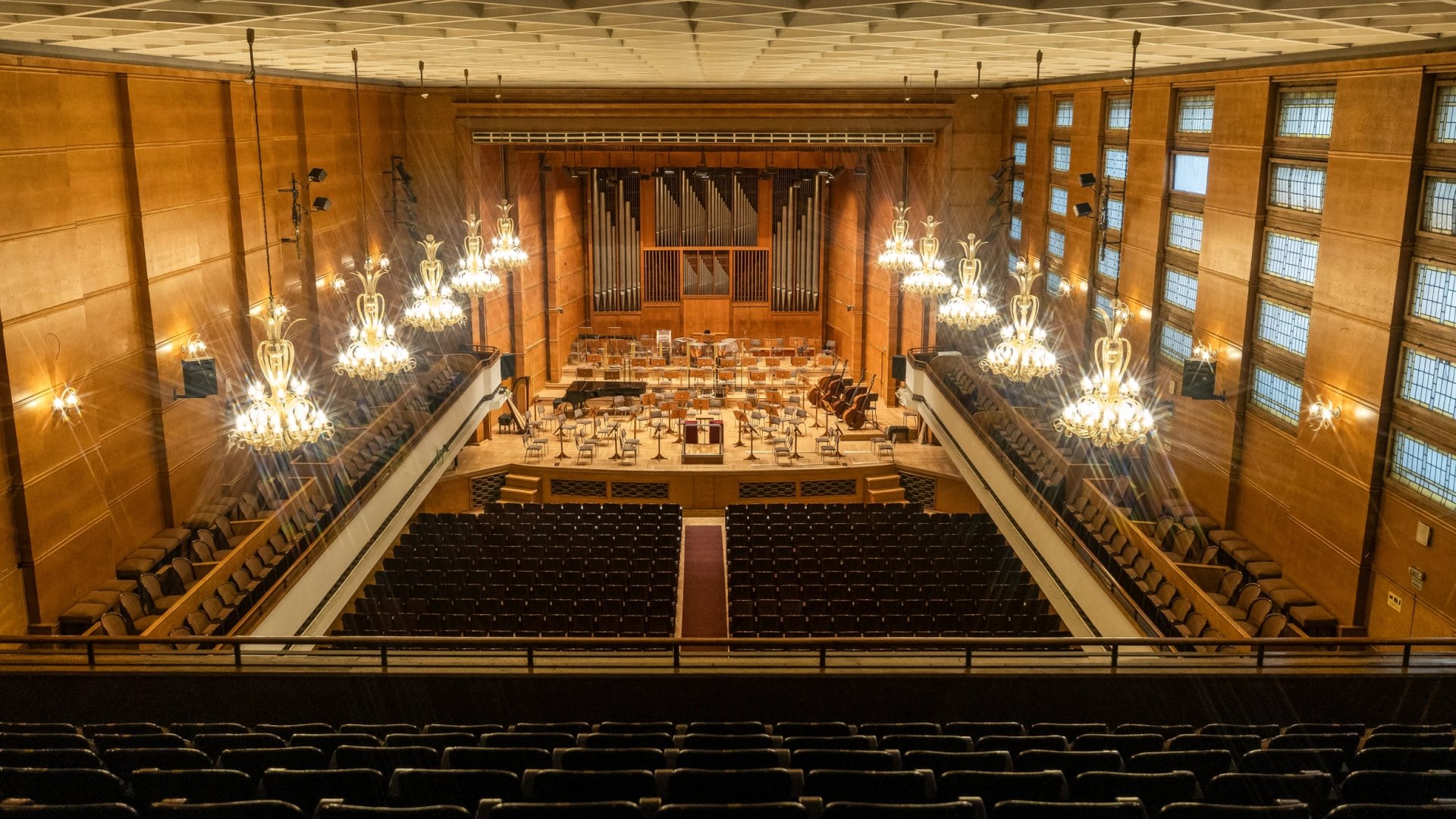
Photo Credit
Image courtesy of © Bulgaria HallWhat makes a room sound right? In Sofia the answer came from Berlin: Bulgaria Hall was lined to the requirements of the Hertz Institute for acoustical research, and it opened in 1937 with a piano concerto written for the occasion. Here are the rooms where the city listens best, from the Philharmonic’s wood-panelled hall to the Opera on Vrabcha Street and a live-music club inside the National Palace of Culture.
Lined in Berlin
Bulgaria Hall was built between 1935 and 1937 as part of a modernist complex with a concert hall, a hotel, a restaurant and a pastry shop. The architects Stancho Belkovski and Ivan Danchov won the commission in a competition in 1932, and they did not lack nerve: sinking chairs in the hall, a transparent roof that opened over the restaurant, sliding windows in the pastry shop.
For the sound, the hall was lined according to the requirements of the Hertz Institute for Acoustical Research in Berlin. It opened on 9 October 1937 with the Academic Symphony Orchestra, the French organist Joseph Bonnet and Pancho Vladigerov, who had written his Piano Concerto No. 3 especially for the opening. Few composers are asked to christen a room; fewer write a concerto to do it.
An organ, twice
The first organ, a German Sauer with four manuals, 72 registers and 6,000 pipes, was the first concert organ in Bulgaria, and the Philharmonic still calls it the largest the Balkan Peninsula has known. It did not last long. On 24 May 1944 the hall was bombed, and the organ and both Steinway concert grands were destroyed beyond repair.
Rebuilding came in stages. In 1949 the hall reopened as the home of the orchestra that had played on the opening night, known today as the Sofia Philharmonic. In 1974 the German firm Schuke installed a new organ with three manuals and 55 registers, the largest in the country today, and in 1978 the complex was declared a cultural monument of national importance.
Today the large hall seats 1,087, the chamber hall 216 and the marble Studio Musica 50. Every hall has a Steinway concert grand, and the complex also owns Bösendorfer and Blüthner instruments, the musical equivalent of keeping three good cars in the garage. On 31 October 2026 Daniel Lozakovich played Shostakovich there on the “ex-Sancy”, a violin Antonio Stradivari made in Cremona in 1713.
The Opera’s rules of silence
Sofia’s opera has a long memory: the first opera troupe in Bulgaria was formed in 1890, and the first complete opera, Leoncavallo’s Pagliacci, was staged on 5 June 1909. The house takes listening seriously. Formal attire is recommended, children under six are not admitted to adult performances, and phones stay off: any light or noise, the Opera says, disturbs the singers as well as the audience.
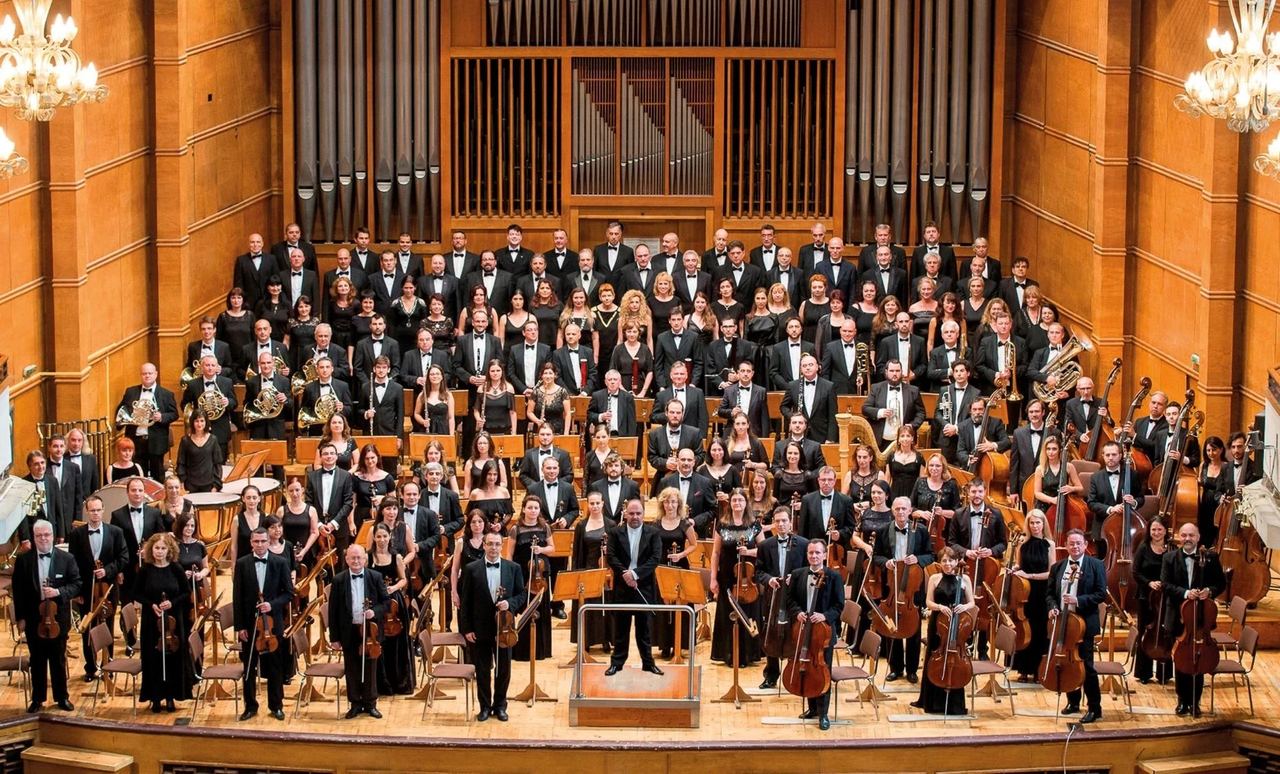
Photo Credit
Image courtesy of © Bulgaria HallThe ballet keeps the same house. Its troupe, almost a century old, maintains nearly 30 classic titles, from Swan Lake and Giselle to Don Quixote and The Sleeping Beauty, and the Opera notes that this is the most demanding part of any repertoire, financially and creatively. In December that means The Nutcracker, most of it sold out well before Christmas Eve.
Few composers are asked to christen a room; fewer write a concerto to do it.
Its most civilised rule concerns latecomers. No one enters the hall once the performance has begun; late arrivals are seated on the third balcony until the first interval, then shown to the seats on their tickets. It is the gentlest punishment in Sofia, and an honest lesson in punctuality.
Downstairs at the NDK
For amplified sound, go to Sofia Live Club in the National Palace of Culture, on Bulgaria Boulevard. The club says it has been staging live music for more than 17 years, with more than 1,500 Bulgarian and international artists on its stage, and it opens every day from 7pm to 2am. Its recent programme has run from Kyoto Jazz Massive to the debut album of the Sofia Jazz Collective.
And to meet the composer of that opening night, visit the Pancho Vladigerov House Museum on Yakubitsa Street, a state memorial museum and music centre that holds concerts and masterclasses. It opens from Tuesday to Saturday, in the afternoon only on Thursday.
Our advice: hear the Philharmonic in Bulgaria Hall first, then compare the Opera; arrive early at the Opera, where latecomers wait out the first act on the third balcony.
Why it's on our list
- Lined in Berlin
- An organ, twice
- The Opera’s rules of silence
- Downstairs at the NDK
Location
The map comes from Google Maps, which sets its own cookies once it loads.
More in depth
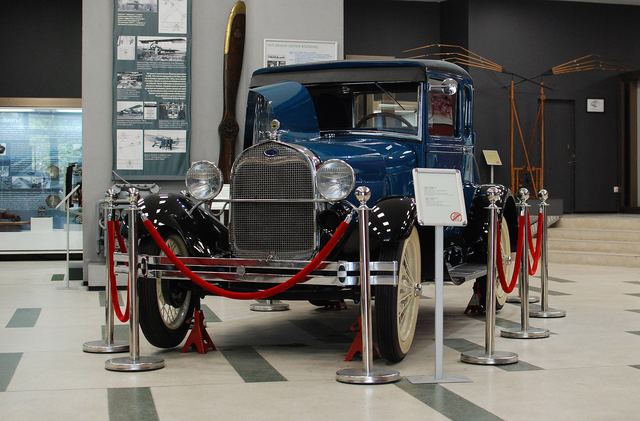 Objects of DesireThe calculator that found the square root: Sofia’s machines, from turbines to illusionsA 1928 Ford, Bulgaria’s first microcomputer and the 1900 power station that ran the trams.
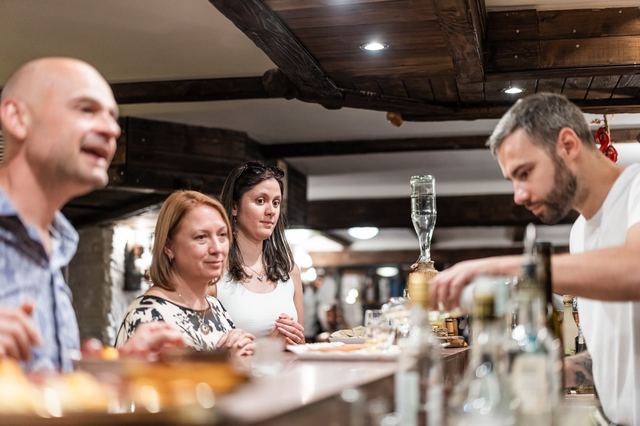 Objects of DesireThirty, thirty, thirty: the Negroni, a rakia cousin and Sofia’s rooms for a slow drinkThe IBA Negroni, a rakia version at the Rakia Museum and the Sofia bars for a slow drink.
 Objects of DesireLess parked than crouched: the electric Jaguar and the new supercarsJaguar’s Type 00 and Type 01, Ferrari’s first electric car and the record-breakers around them.